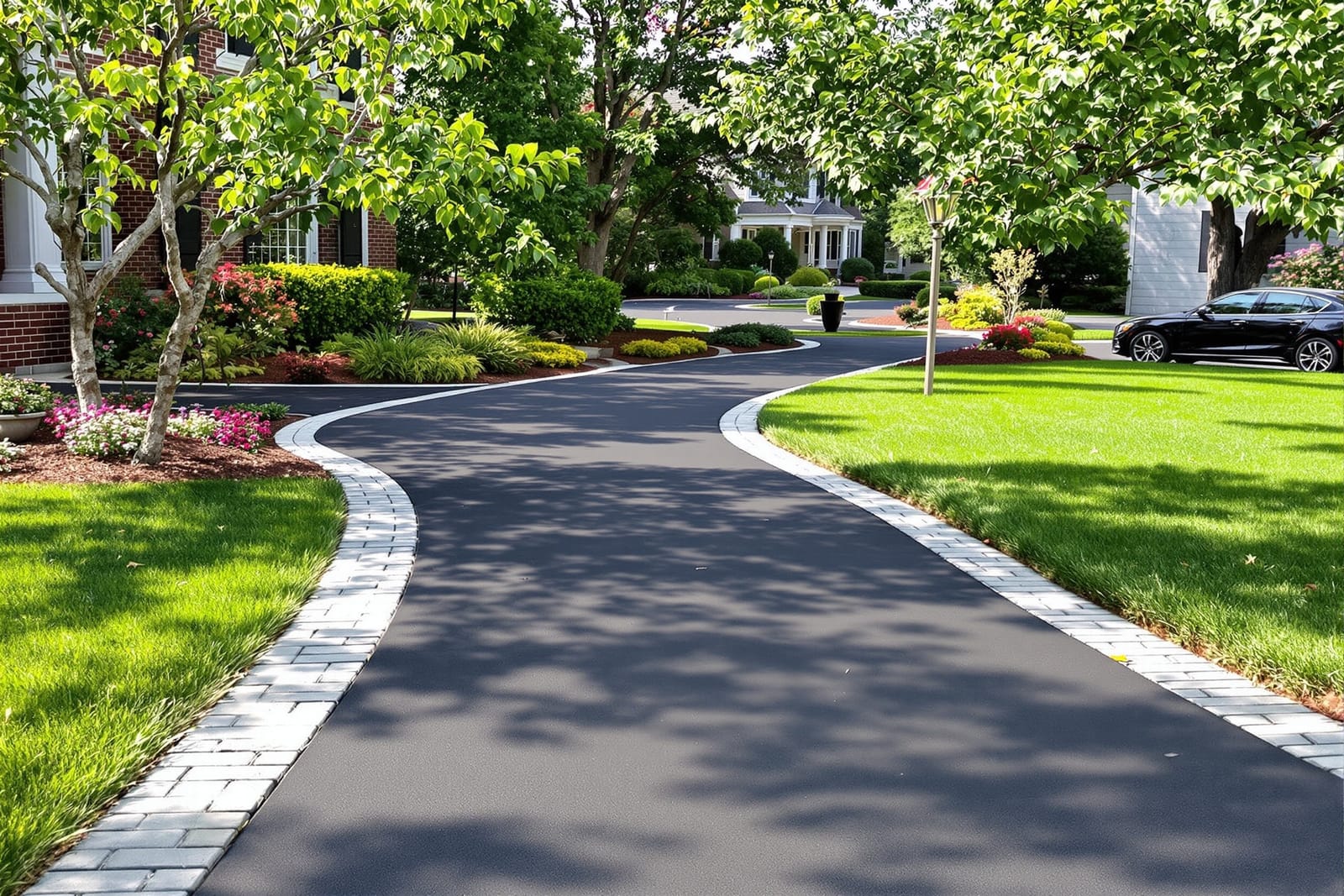
Home › Walkway and Pathway Paving
Create smooth, safe access around your property with asphalt walkway paving in Omaha, NE. We design and install clean, durable paths that connect driveways, patios, yards, and garden areas.
Precision Asphalt Omaha provides professional asphalt walkway paving throughout Omaha, NE, Nebraska and the surrounding area. Our licensed, insured crew delivers safe, clean, on-time work with a free estimate before anything begins. Call (402) 370-7792 or request your free quote.
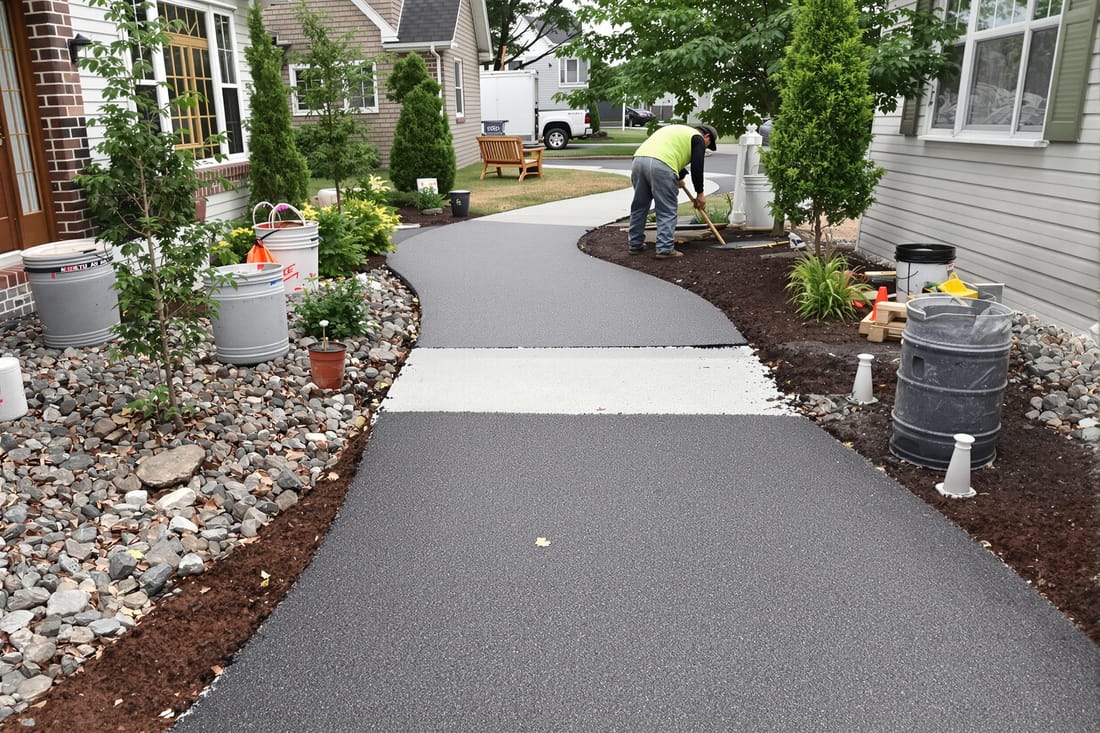
Asphalt Walkways and Paths Built for Omaha Properties
Asphalt walkway paving is a practical way to create clean, safe routes around your home, business, or HOA property. At Precision Asphalt Omaha, we focus on walkways and pathways that look neat, drain correctly, and hold up to Nebraska freeze-thaw cycles.
Walkways see a different kind of use than driveways. Instead of heavy vehicles, they deal with foot traffic, bikes, strollers, snow shovels, and ice melt. That means the mix design, base prep, and slope all need to be tailored to smaller loads and more frequent surface contact. Done right, your paths will not heave, puddle, or crumble at the edges.
Most of our walkway work in Omaha involves connecting parking lots to building entrances, linking sidewalks to back patios, adding paths through apartment and HOA common areas, and creating loops around churches, schools, and parks. We also do narrow access lanes for garbage and delivery routes that need to be walkable and plow-friendly.
Because we live and work here, we know how Omaha clay soils, winter frost, and summer heat affect narrower paved strips. That local experience drives how we design the base depth, compaction, and drainage for each walkway instead of applying a one-size-fits-all driveway standard.
How Our Walkway and Pathway Paving Process Works
When you call Precision Asphalt Omaha for asphalt walkway paving, we start with a site visit. We walk the planned route with you, check existing grades, look for drainage issues, and note utilities, tree roots, and access for our equipment. We measure the width and length so you get a clear, written estimate.
Layout and excavation are next. We mark the path with paint and string lines, then strip sod and soft soil down to solid subgrade. For most Omaha walkways we target 4 to 6 inches of compacted base stone, but we adjust that if we find poor native soil, heavy clay, or old fill. Any soft spots are dug out deeper and replaced with stone so the walkway will not sink in sections.
We install and compact the base with a plate compactor or roller, depending on access. The surface is checked with levels to set a slight cross slope, usually about 2 percent, so water runs off the path instead of sitting on it. In higher traffic or ADA routes we pay particular attention to transitions so there are no harsh bumps or trip hazards.
Once the base is tight and shaped, we install edge forms if needed for sharp curves or raised borders, then place hot mix asphalt. For walkways we typically install 2 to 3 inches of asphalt after compaction. Our crew rakes and smooths the mat, then uses small rollers that fit narrower paths and tight corners. We watch each joint carefully so the finished surface is smooth and consistent from section to section.
After rolling, we rope off or cone off the area. In typical Omaha summer temperatures, light foot traffic is fine the next day, but we recommend waiting at least 24 hours and avoiding heavy carts or equipment for 48 to 72 hours so the surface has time to set properly.
Design Options for Paths That Match How You Use Them
Asphalt walkway paving is more flexible than many people realize. With Precision Asphalt Omaha, you can choose details that match how the path will be used and how you want it to look.
Width is a big one. Residential side-yard walkways can be as narrow as 3 feet, but for two people walking side by side or for snow blower access, 4 to 5 feet is more comfortable. For commercial or HOA paths that handle bikes, strollers, or maintenance carts, we often recommend 6 to 8 feet so there is room to pass safely.
We can shape the route with gentle curves instead of a straight line, which often works better around trees, landscaping, and existing patios. Asphalt handles curves well as long as the base follows the same shape and the edges are properly supported. In Omaha neighborhoods where tree roots are a concern, we adjust the alignment or deepen and reinforce certain sections so roots are less likely to push up the surface.
Surface finish is another option. Standard machine-finished asphalt gives a smooth, even surface that works well for snow shoveling and plowing. In some shaded or steeper sections, we can leave a slightly more textured finish to improve traction in wet or icy weather. We also coordinate striping or painted markings for shared-use or school walkways when needed.
Edges can be left flush with the lawn or tied into concrete, landscaping stones, or existing pavements. In areas that see a lot of foot traffic crossing off the side, we often recommend adding a few inches of extra base and asphalt beyond the visible edge to prevent crumbling. Where the path meets city sidewalks or driveways, we match elevation and slope to avoid a lip that could catch strollers or wheelchairs.
Costs, Local Conditions, and Common Walkway Problems
Several factors drive the cost of asphalt walkway paving in the Omaha area, and we explain each one before work starts. Total square footage is the biggest factor, but access, base work, and removal of existing materials can change the price more than people expect.
If we can reach the path route easily with our equipment, costs stay lower. Tight backyards with narrow gates or steep slopes may require smaller machines and more hand work, which takes extra labor time. Removing old concrete or brick pavers is more expensive than stripping sod because of disposal and the time it takes to break and haul the material.
Base preparation is where local soil conditions really matter. Omaha has a lot of heavy clay pockets and some fill areas that were never compacted properly. If we discover unstable soil during excavation, we will either undercut deeper and add more stone or, in some cases, use a fabric separator below the base. These steps cost more up front but prevent the most common failures: settling, dips that hold water, and cracks that follow the soft spots.
Common walkway problems we see on older paths include edges crumbling where there is no lateral support, water standing in low spots after storms, and sections that heave up from freeze-thaw. At Precision Asphalt Omaha, we handle these by cutting out failed areas, rebuilding the base, and tying the new asphalt back into the existing surface with clean, straight seams. For repeated drainage issues, we may regrade a stretch or add a small swale or drain beside the path to move water away.
De-icing in Omaha winters is another consideration. Rock salt is generally fine on asphalt, but large amounts of certain ice melts can soften very new pavements. We walk customers through which products and techniques to use in the first winter after paving so the surface is not damaged while it is still curing.
What to Expect When You Hire Precision Asphalt Omaha
When you hire Precision Asphalt Omaha for asphalt walkway paving, you get a clear process from first call through final cleanup. We start by listening to what you want the path to do: connect buildings, provide ADA access, create a walking loop, or simply give a clean route to the backyard. Then we propose a layout, base depth, and asphalt thickness that fits that use and your budget.
Your written proposal will spell out the scope, including whether we are removing old material, how thick the base and asphalt will be, and how we plan to handle drainage and any transitions to existing concrete or asphalt. That way there are no surprises on the day of the job.
On installation day we protect nearby lawn and landscaping as much as possible, especially in tight Omaha yards. We keep you updated if we find unexpected conditions such as buried debris or very soft soil that requires extra base, and we do not make those changes without your approval.
After paving, our crew does a final walk-through to check for surface smoothness, consistent slopes, and clean edges. We remove debris, sweep up loose material, and make sure all cones or tape are in place so the walkway can cure without unwanted traffic. You will get simple instructions on when to walk on it, when to place heavy items, and how to maintain it through the first year.
We stand by our work. If you have questions after the job is complete, or if you notice something that does not look right once you have lived with the new walkway for a bit, you can call us and talk to the same local team that installed it.