Home › Industrial and Heavy-Duty Asphalt Paving
Handle heavy traffic with confidence using industrial asphalt paving in Omaha, NE. We design and build thick, reinforced asphalt sections for truck yards, loading docks, and equipment areas.
Precision Asphalt Omaha provides professional industrial asphalt paving throughout Omaha, NE, Nebraska and the surrounding area. Our licensed, insured crew delivers safe, clean, on-time work with a free estimate before anything begins. Call (402) 370-7792 or request your free quote.

Industrial Asphalt Paving Built for Omaha’s Toughest Sites
Industrial asphalt paving is a different animal than a basic parking lot. At Precision Asphalt Omaha, we design and build pavements that stand up to loaded semis, forklifts, loaders, and round-the-clock operations across the Omaha metro.
When we look at an industrial project, we start with how the pavement will actually be used. Are you storing loaded trailers for weeks at a time. Running forklifts with solid tires. Turning trucks sharply at dock doors. Each of those puts different stress on the asphalt and base. We walk the site with you, study traffic patterns and loading, and then design the section thickness and materials for each area instead of using one generic spec for the whole property.
Because Omaha sees freeze-thaw cycles, heavy summer rains, and wide temperature swings, we focus a lot on drainage and subgrade preparation. A heavy-duty asphalt surface is only as strong as the base underneath it. If water can sit under the pavement or in the base course, you will see rutting, pumping, and potholes long before the pavement should fail. For industrial sites in Nebraska, a good design is as much about what you do below the blacktop as what you see on top.
How Heavy-Duty Asphalt Paving Actually Gets Built
Our industrial asphalt paving process is structured so you know what is happening at every step and why it matters to your operation.
1. Site evaluation and coring: For existing facilities, we often recommend test cores or test pits to see what base and subgrade you already have. This tells us whether we can overlay, mill and pave, or need full-depth reconstruction. We also look at drainage paths and where water is currently collecting or freezing in winter.
2. Subgrade correction: On new construction or failed areas, we remove soft or saturated soils and replace them with compacted granular fill. In many Omaha industrial yards, we encounter clay subgrades that need moisture conditioning and proof-rolling to reach proper density. We will not pave over a pumping or flexing base, because it will not survive truck traffic.
3. Aggregate base installation: For heavy-duty areas, we usually use a thicker crushed rock base than a typical commercial lot. Dock approaches and lane ruts for semis might receive 8 to 12 inches of compacted base, sometimes more if your geotechnical report calls for it. We compact in thin lifts and run density tests so the base does not settle under repeated loading.
4. Asphalt mix selection and lift placement: Industrial asphalt paving often uses stiffer mixes with higher stone content and modified binders. We place the asphalt in multiple lifts rather than one thick layer. For example, a heavy truck lane might get a 3-inch base course and a 2-inch surface course, each compacted separately. That layered approach improves load distribution and allows us to tailor the top mix for traction and wear.
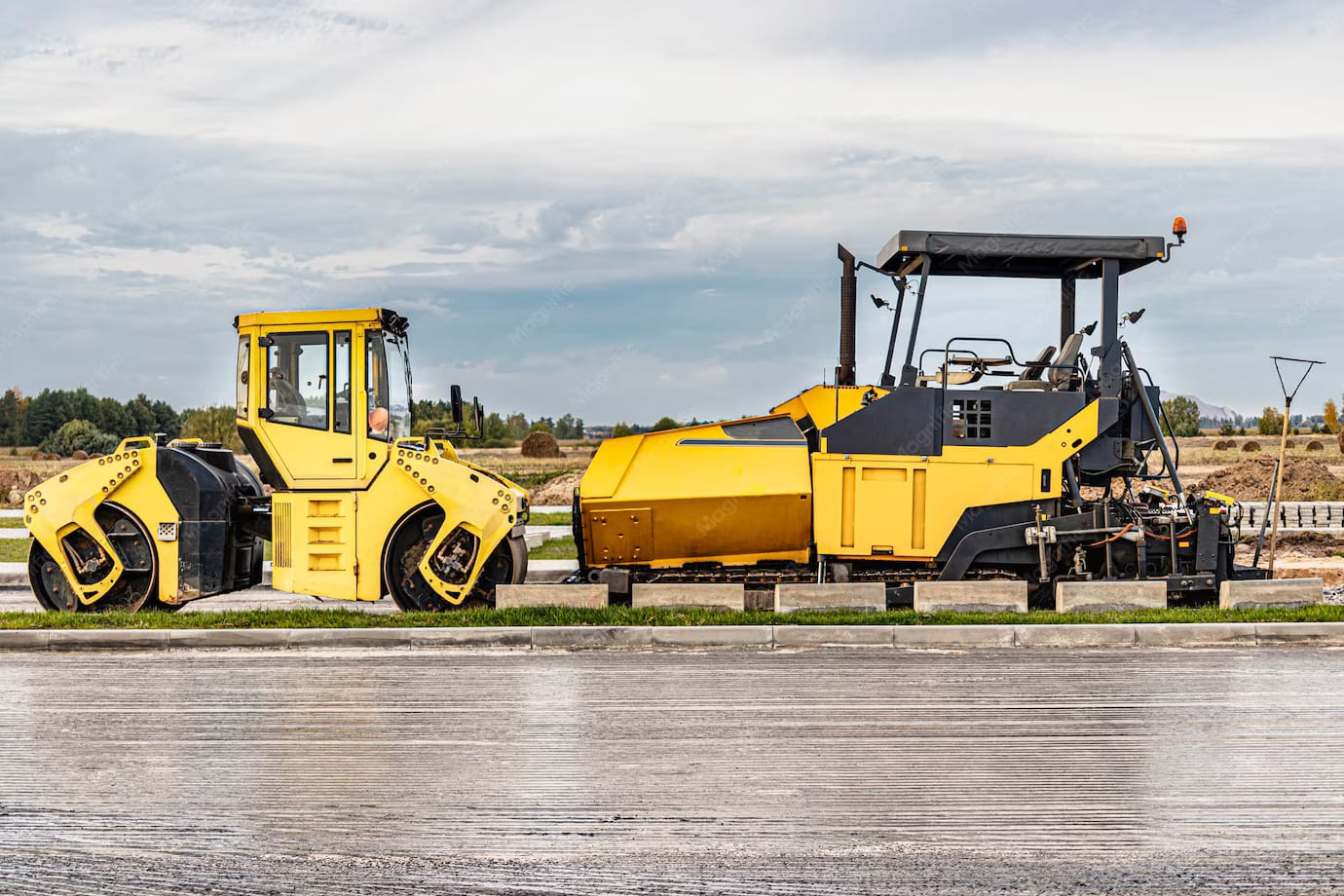
5. Compaction and joint control: For heavy-duty work, compaction is critical. We run steel drum and pneumatic rollers at the right temperatures and sequence so we hit target density. We pay close attention to longitudinal joints (where paver passes meet), because weak joints are usually where early cracking starts, especially when trucks track along those seams.
Design Options for Heavy Traffic, Docks, and Equipment Yards
Industrial facilities rarely need the same pavement everywhere. Precision Asphalt Omaha often breaks a property into three or four pavement zones so you are not overpaying for strength where you do not need it.
High-load zones: These include loading bays, dumpster pads, fuel islands, and queuing lanes for loaded semis. Here we may recommend very thick asphalt sections, a cement-treated base, or sometimes a concrete pad inset into an asphalt yard for the absolute highest load points, such as under trailer landing gear.
Circulation and parking areas: Employee and visitor parking, and light-traffic drive lanes, can often use a more economical section with standard heavy commercial asphalt, as long as drainage is handled well. We still design these areas for plow traffic and snow equipment, which is important in Omaha winters.
Forklift and equipment routes: Solid-tire forklifts and heavy equipment can cause accelerated wear. For these paths, we may tighten the joint layout, use mixes with a higher-quality aggregate, and limit sharp grades or transitions that cause scrubbing. We also think about visibility and safety, so we integrate striping, turning radii, and any wheel stops into the plan.
Surface texture and slope: For industrial clients, we talk frankly about traction, ponding, and snow removal. A slight cross-slope and well-positioned inlets will keep meltwater from refreezing at dock doors. For yards where fine dust or grain is present, we avoid overly smooth surfaces that become slick when wet. These details are decided with you upfront so the final pavement supports your daily operations instead of fighting them.
Costs, Bids, and What Drives Your Budget in Omaha
Industrial asphalt paving costs are driven by more than just square footage. When Precision Asphalt Omaha prepares a proposal, we break down the key cost drivers so you can see where your dollars go.
Thickness and structure: The number one factor is pavement and base thickness. A 5-inch industrial section with a 10-inch base will cost more upfront than a light-duty lot, but if you run loaded trucks daily, going too thin will cost more in repairs, downtime, and overlays within a few years. We walk through service life expectations so you can make an informed decision.
Existing conditions: Rebuilding failed areas is more expensive than overlaying a sound base. If your current yard is alligator cracked and pumping water, we will clarify where we can mill and replace versus where full-depth reclamation or undercutting is needed. In Omaha, older industrial sites along the river or low-lying areas often require more undercutting because of moisture and poor original fill.
Phasing and access: Keeping your operation running during construction can affect cost. If work must be done only on weekends or in tight phases to maintain truck access, there is more mobilization and traffic control. We work with your shipping and production schedules to sequence the work so you are not shut down.
Season and timing: In Nebraska, the best paving window is typically late spring through early fall. Paving in cooler shoulder seasons can still be done, but may require adjustments in mix temperature and crew timing, which can affect pricing and scheduling. We will be direct with you about what can safely be done in each month so you are not paying for work done in marginal conditions.
Planning, Maintenance, and What to Ask Before You Hire
Heavy-duty asphalt is an investment, and it performs best when the planning and long-term care are taken seriously from day one.
Project planning: Before you hire any contractor for industrial asphalt paving, ask how they will evaluate your subgrade, what design assumptions they use for truck loads, and whether they plan different pavement sections for different use areas. If the answer is the same thickness everywhere without a site visit, you are likely not getting a true industrial design.
Weather and scheduling in Omaha: We watch extended forecasts closely, especially in spring and fall, to avoid paving right before a cold snap or heavy rain. If night work is required to minimize disruption to your operation, we make sure lighting and quality control are addressed so compaction and joint work are not compromised in the dark.
Maintenance plan: After the pavement is in service, the best value comes from targeted maintenance. Within the first year, we recommend a walkthrough to look for any early issues such as edge raveling or drainage problems. Over time, crack sealing, localized patching at high-stress points, and eventually a resurfacing overlay can extend the life of the original structure significantly.
Documentation and communication: Precision Asphalt Omaha provides clear drawings or diagrams showing pavement sections, joint locations, and any reinforced or thickened areas around docks and heavy-use zones. That way, if you add equipment, change traffic patterns, or plan future buildings, you know exactly what is under your tires.
If you are planning a new facility, upgrading an older plant, or trying to fix recurring problems in your truck courts or equipment yard, we are happy to walk the site with you, explain what we see in plain language, and give you options tied to real-world performance instead of generic square foot prices.