Home › Asphalt Driveway Repair & Replacement
Extend the life of your driveway with expert asphalt driveway repair in Omaha, NE. From patching and crack repair to full removal and replacement, we restore residential driveways to safe, smooth condition.
Precision Asphalt Omaha provides professional asphalt driveway repair throughout Omaha, NE, Nebraska and the surrounding area. Our licensed, insured crew delivers safe, clean, on-time work with a free estimate before anything begins. Call (402) 370-7792 or request your free quote.
Asphalt Driveway Repair & Replacement in Omaha, NE
If your driveway has started to crack, sink, or shed loose gravel, you are not alone in Omaha. Our freeze-thaw cycles, heavy pickup trucks, and snow removal equipment are hard on asphalt. Precision Asphalt Omaha focuses specifically on asphalt driveway repair and replacement, so we understand what local homes actually need, from 1950s bungalows in Benson to newer builds out in Elkhorn and Gretna.
Instead of a one-size-fits-all quote, we look at how your driveway is failing. Hairline cracking and light raveling can often be handled with targeted repairs and a fresh surface layer. Wide cracks, deep potholes, or major sinking near the garage usually mean there is an underlying base issue. We match the repair method to the cause of the problem so you are not paying for a full replacement when a solid repair will hold up, or patching a driveway that is already at the end of its life.
On every project, we walk the driveway with you, point out what we see, and explain your options in plain language. You will know what can be repaired, what really should be replaced, and what you can safely postpone so you can prioritize your budget.
How We Repair Asphalt Driveways in Omaha
For driveway repairs, Precision Asphalt Omaha focuses on long-term fixes instead of quick cosmetic patches. The exact process depends on the condition, but most Omaha driveway repair projects follow a few key steps.
First, we identify and mark all defects: linear cracks, alligator (web) cracking, potholes, low spots that collect water, and edges that are breaking away. We also look at drainage patterns from your roof downspouts and yard grading, because standing water is one of the biggest driveway killers in our climate.
Crack repair starts with cleaning. We use wire brooms, compressed air, and sometimes heat to remove dirt, vegetation, and moisture from the crack. Then we fill it with a hot rubberized crack sealant that remains flexible in Nebraska temperature swings. For wider cracks, we rout them to create a uniform channel before sealing so the material bonds better and does not pop out after one winter.
Pothole repair is more involved. We cut the pothole into a neat rectangular or square area, saw-cutting the perimeter so the patch has straight, strong edges. We remove all loose asphalt and soft base material, then recompact the sub-base. If the base is saturated or pumping mud, we add new base rock, compact in thin lifts, and only then install hot-mix asphalt. The patch is placed slightly high and compacted with a roller or plate compactor so it finishes flush with the surrounding surface.
For areas with widespread surface wear but still-solid base, we may recommend a thin asphalt overlay. We clean the driveway, apply a tack coat that helps the new asphalt bond to the old, then install a new surface layer, usually 1 to 2 inches thick. This is often a good option for 15 to 20 year old Omaha driveways that look rough but are not yet structurally failed.
We will also address edge failures, common along driveways where tires regularly run off the side. We cut back the broken area, rebuild the edge, and may widen the drive slightly or recommend adding a compacted gravel shoulder so the new edge is not left hanging.
Asphalt Driveway Replacement: When a New Driveway Makes Sense
At some point, repair is no longer cost effective and a full asphalt driveway replacement becomes the smarter investment. In Omaha, this is common with driveways from the 1970s and 1980s that have had multiple patch jobs and are now heaving, sinking in sections, or showing deep alligator cracking from end to end.
When Precision Asphalt Omaha replaces a driveway, the first decision is whether to remove all the old asphalt and base or perform a mill and replace. On most residential properties, we recommend full-depth removal so we can correct base problems that caused the old driveway to fail.
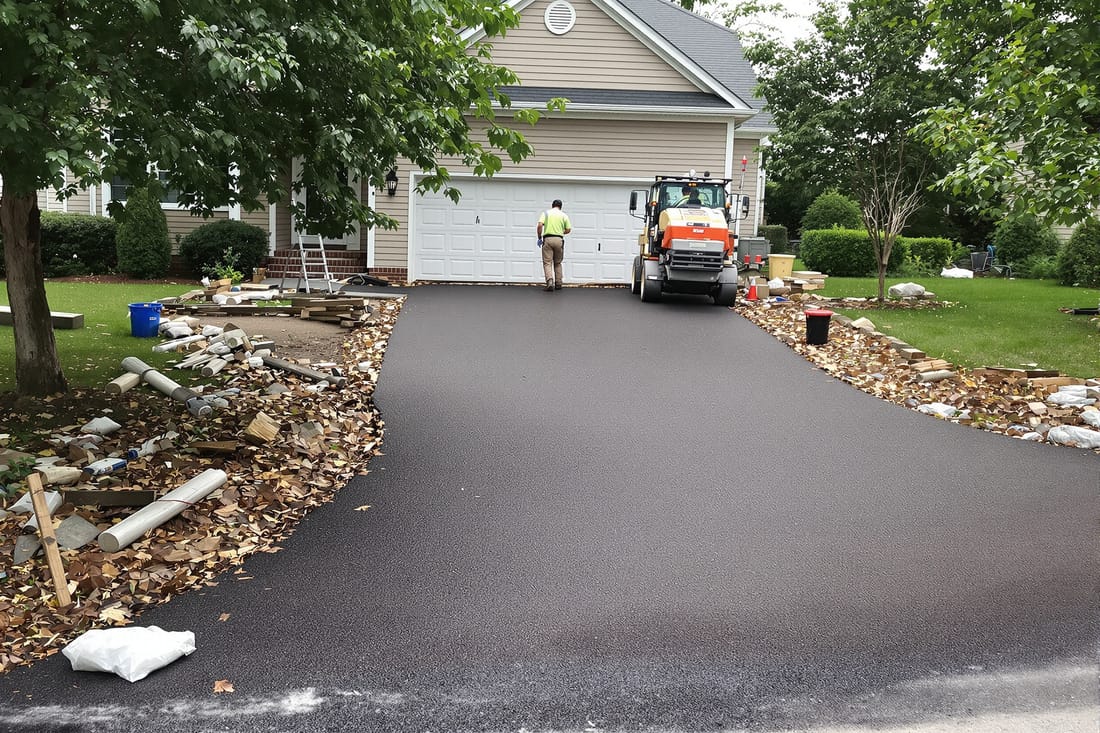
The process starts with tearing out the existing asphalt using skid steers and, where needed, small excavators. We haul the old asphalt off for recycling rather than leaving it on site. Once the surface is gone, we evaluate the base. In many older Omaha neighborhoods, the original driveways were installed on thin or poorly compacted base rock. If we find soft spots, organic soil, or clay holding water, we excavate deeper, install new crushed rock, and compact in layers.
Next, we fine grade the base to establish proper drainage away from your garage and home foundation. Even a small adjustment here can prevent the puddles that lead to winter ice sheets and premature cracking. We check elevations at the street, sidewalk, and garage slab to avoid trip hazards and comply with any city requirements.
Once the base is compacted and stable, we install new hot-mix asphalt, typically 2 to 3 inches compacted thickness for standard residential driveways, and more for heavier use like RV or boat parking. The asphalt is laid with a paver where access allows or hand-placed in tighter spots, then compacted with a roller to achieve a smooth, dense surface.
We pay particular attention to transitions at the garage, sidewalk, and street. These are common failure points if not supported correctly. Proper joint preparation and compaction in these areas helps prevent the cracking you may have seen where some driveways meet the curb.
Cost, Options, and What Affects Your Asphalt Driveway Price
Homeowners often ask, "What does asphalt driveway repair cost in Omaha?" The honest answer is that it depends on several specific factors, and we want you to understand those before you decide.
For repairs, the main cost drivers are size and severity of damage, access, and preparation work. Filling a few small cracks is inexpensive. Large-scale crack routing and sealing, multiple pothole patches, or a full overlay requires more labor, material, and equipment. If your driveway is tucked behind a house in Dundee with limited access, we may need smaller equipment and more hand work, which slightly increases labor.
Replacement pricing is driven by driveway size, thickness of asphalt, how much base work is needed, and any special site conditions. A straight, 2-car driveway in a newer subdivision with decent base will be less than a long, curved drive on a hillside acreage outside Omaha that needs substantial grading and drainage correction.
You also have material and design options that influence budget. We can adjust asphalt thickness depending on whether you routinely park work trucks, trailers, or RVs. We can tighten the mix design for a denser surface or discuss options for reinforcing a problem area, such as where you repeatedly turn your wheels when backing out. If you are comparing quotes, be sure each contractor is specifying the same asphalt thickness and base depth, or you may think one price is cheaper when it is actually a thinner, weaker section.
We are straightforward about where you can save and where we do not recommend cutting corners. For example, skipping base repair on a sinking area almost always leads to repeat failure. On the other hand, shaping perfect decorative curves where they are not needed might be something you can skip to stay within budget.
Precision Asphalt Omaha provides written estimates that list the work included, from square footage and thickness to base replacement and any drainage adjustments, so you know exactly what you are paying for and can compare apples to apples with other bids.
What Omaha Homeowners Should Know Before Hiring an Asphalt Contractor
Choosing who repairs or replaces your driveway matters more than most people realize. A driveway can look fine on day one but fail early if the base, drainage, or compaction is wrong. Here are a few things Precision Asphalt Omaha encourages every homeowner to verify, whether you hire us or not.
Ask how the contractor will evaluate your base. If they only look at the surface from the street and give a price on the spot, they are guessing. A proper assessment may involve core sampling or at least probing soft areas after a small test cut. This step is especially important in parts of Omaha with clay-heavy soils that hold water.
Confirm what equipment will be used. For example, residential driveways should be compacted with an appropriate roller, not just a plate compactor for large areas. The contractor should plan for enough passes to reach proper density so the asphalt does not rut or shift under your vehicle tires.
Talk about timing and weather. In Nebraska, asphalt installation and repair is seasonal for a reason. Temperatures that are too low or surfaces that are too wet can affect how the asphalt sets and bonds. We schedule work when conditions will produce a durable result and will tell you upfront if weather means a short delay.
Ask about curing and use guidelines. Generally, you can walk on a new asphalt driveway within a day but should wait several days before parking vehicles, and longer before placing trailers or heavy equipment. We provide written care instructions tailored to your project, including how to handle snow removal the first winter so you do not damage the new surface.
Finally, verify insurance and local experience. An insured contractor who works regularly within Omaha and nearby communities will understand local codes, typical lot layouts, and common problem areas, such as drainage toward alleyways or shared drives. Precision Asphalt Omaha is happy to share references from recent driveway repair and replacement jobs in neighborhoods similar to yours so you can see the kind of work we actually deliver.