Home › Asphalt Driveway Installation
Get a smooth, durable asphalt driveway installation in Omaha, NE that boosts curb appeal and withstands Midwest weather. We handle everything from grading to compaction and paving for a long lasting driveway.
Precision Asphalt Omaha provides professional asphalt driveway installation throughout Omaha, NE, Nebraska and the surrounding area. Our licensed, insured crew delivers safe, clean, on-time work with a free estimate before anything begins. Call (402) 370-7792 or request your free quote.
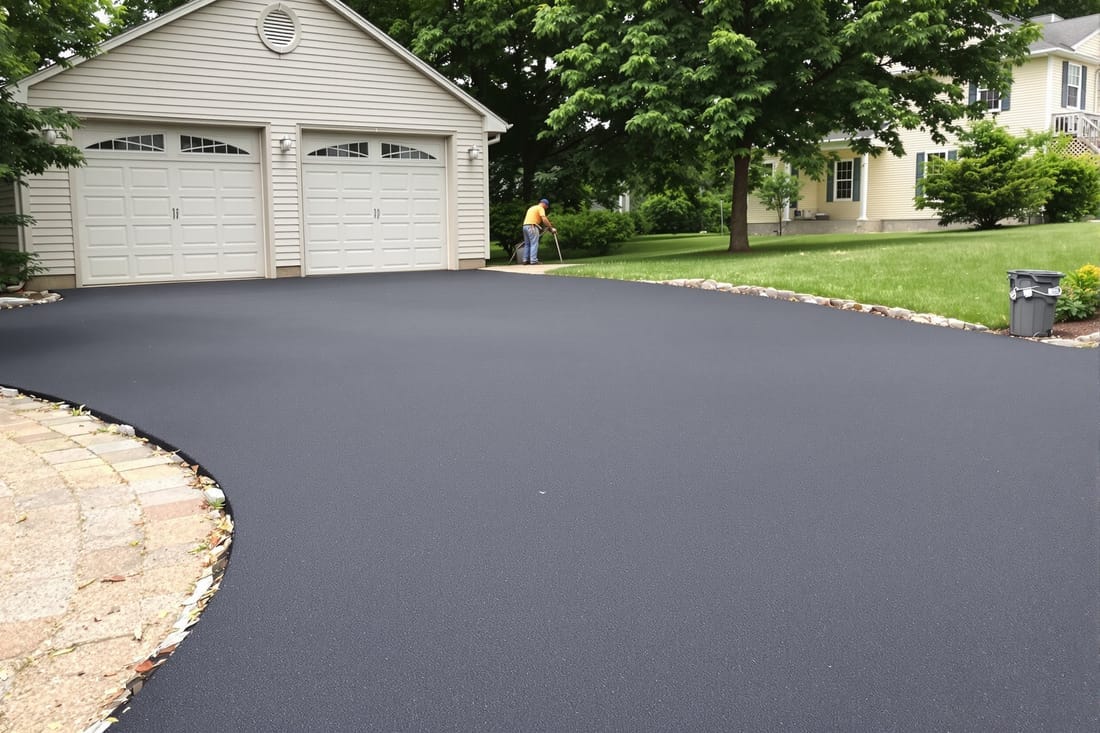
Asphalt Driveway Installation in Omaha, NE
A new asphalt driveway is a long-term investment in your Omaha home, and it needs to be built for our freeze-thaw cycles, clay-heavy soils, and snow removal needs. Precision Asphalt Omaha focuses specifically on driveways that stand up to Nebraska weather and daily use, not just something that looks good on day one.
When we install an asphalt driveway, we start by looking at how you actually use your property. We consider vehicle weight, turning areas, boat or camper parking, and how snow is typically plowed or blown on your street. These details affect the pavement thickness, base depth, and layout so the driveway does not rut, crack, or heave after a couple of winters.
Our team is local to the Omaha area, so we understand typical subdivision rules, common drainage issues in older neighborhoods, and how city plows push snow and slush back onto driveways. All of that goes into building an asphalt driveway that is practical, durable, and easy to maintain for years.
Our Local Driveway Installation Process
Precision Asphalt Omaha follows a defined process for asphalt driveway installation so each step is inspected before the next one begins.
1. Site visit and measurements: We visit your Omaha property, mark out the driveway footprint, check elevations, and locate utilities. We look for low spots where water collects and any evidence of previous settling or cracking.
2. Planning and layout: We confirm width at the street, parking areas near the garage, and any desired walk-off pads or turnarounds. If you have an HOA, we can help you align the layout and appearance with their rules, including edge lines and driveway width limits.
3. Excavation: We remove grass, soft soil, and any old pavement. For most residential driveways in Omaha we excavate 8 to 12 inches, depending on soil conditions and vehicle loading. Poor or soggy subgrade is dug out deeper and replaced so the base does not pump or shift.
4. Base installation: We install a compacted aggregate base, typically 4 to 8 inches of crushed rock, adjusted for local soil conditions. Every 2 to 3 inches are compacted with a vibratory roller to achieve a firm, stable platform.
5. Fine grading and drainage: We shape the base so water runs away from your house, garage, and sidewalks. Typical driveways are sloped at least 2 percent toward the street or a swale. This step is crucial in Omaha where spring thaws and summer storms can quickly expose poor drainage.
6. Asphalt paving: We place hot mix asphalt in one or two lifts (layers), usually totaling 3 to 4 inches compacted for standard residential use. High-use or RV driveways may require more. While the asphalt is still workable, we roll it to achieve a smooth, dense surface with clean joints at the street and garage.
7. Final edges and cleanup: We compact the edges, feather into the yard, and clean up soil and debris. If you prefer, we can return to seed or rock the sides so the new driveway blends with your landscaping.
Material Options and Design Choices for Your Driveway
Even though asphalt is dark by nature, you still have meaningful choices in how your new driveway looks and performs.
Mix design: For most Omaha driveways, Precision Asphalt Omaha uses a state-approved hot mix that balances flexibility with durability for freeze-thaw cycles. For heavier vehicles or frequent turning, we may recommend a mix with a slightly higher stone content for added strength.
Thickness and structure: A light-use driveway for cars might use 3 inches of compacted asphalt over a 4 to 6 inch base. If you routinely park a camper, trailer, or work truck, we may suggest 4 inches or more of asphalt with a thicker base. These differences are not visible on the surface, but they are critical to long-term performance.
Layout details: We can widen a narrow drive to add a parking bay, soften tight curves that are hard to navigate in winter, or add a small apron for easier backing out onto Omaha streets. In cul-de-sacs, we often shape the driveway to work better with snow plowing patterns so windrows do not constantly block you in.
Transitions and borders: We pay special attention to the joint at the street and your garage floor. At the street, we tie into existing concrete or asphalt with a smooth transition so there is no lip to catch snow blowers or shovels. At the garage, we set the asphalt slightly below the slab edge to prevent water from running into your garage.
Future upgrades: If you plan to add a basketball hoop, extra parking pad, or detached garage later, we can design the initial driveway and base to connect cleanly with future asphalt work so you are not tearing up a new surface before its time.
Cost Factors for Asphalt Driveway Installation in Omaha
Homeowners often ask why asphalt driveway prices vary so much. Precision Asphalt Omaha explains these cost drivers up front so you can compare estimates fairly.
Size and shape: Straight, rectangular driveways are more efficient to build. Curves, extra parking pads, or turnarounds require more time for layout, grading, and handwork. We measure the area precisely so you know exactly how many square feet you are paying for.
Existing conditions: Removing an old concrete driveway costs more than removing an old asphalt or gravel drive because the concrete must be broken, loaded, and disposed of separately. Poor subgrade that requires undercutting and replacement with rock also adds to the cost, but it is a worthwhile investment for long-term performance in Omaha’s freeze-thaw climate.
Thickness and base depth: Two bids that both say “new asphalt driveway” may be quoting very different pavement structures. A driveway with 2 inches of asphalt on a thin base will be cheaper up front but will usually fail sooner. We specify base depth and asphalt thickness in writing so you understand what you are getting.
Access and site constraints: Tight backyards, steep slopes, and limited truck access can increase labor. City streets that are hard to stage trucks on, especially in busy parts of Omaha, may also add some cost due to extra coordination.
Timing and scheduling: Asphalt plants in the Omaha area operate seasonally, and material prices can fluctuate. We try to lock in pricing when we schedule your work and avoid surprise upcharges unless you request scope changes, such as more area or added parking pads.
How Precision Asphalt Omaha Builds Driveways for Nebraska Weather
Our climate creates stress on pavement that you do not see in warmer regions. Hot summers, freeze-thaw cycles, and the need for frequent snow removal all affect how we design and build asphalt driveways.
Freeze-thaw and subgrade movement: Omaha’s winters cause the soil beneath your driveway to expand and contract. To deal with this, we remove soft or organic soils during excavation, use a well-compacted rock base, and avoid trapping water under the pavement. This reduces heaving and the formation of reflective cracks.
Snowplows and equipment: Shovels, snow blowers, and plow blades can damage poorly compacted edges and thin asphalt lifts. We compact the edges thoroughly and avoid feather-thin areas that are likely to unravel after a few winters. We also aim for smooth street transitions that will not catch plow blades.
Drainage and icing: Standing water turns into ice. We grade the driveway so water flows away quickly and does not sit in tire ruts or at the garage door. In older Omaha neighborhoods where streets may have settled, we pay extra attention to the cross slope at the apron so water does not pool where your driveway meets the street.
Heat and UV: Summer heat can soften low-quality asphalt mixes. We work with reputable local suppliers and use mixes appropriate for residential driveways so rutting from parked vehicles is minimized, even during hot stretches in July and August.
Common Driveway Problems and How We Prevent Them
Many of the calls we get at Precision Asphalt Omaha are from homeowners who are unhappy with a past installation that did not hold up. We use those experiences to guide how we build new asphalt driveway installations.
Premature cracking: Hairline surface cracks are normal over time, but early, wide cracks often indicate a base or drainage problem. We address this by building sufficient base depth, compacting thoroughly, and designing for proper water runoff. We also avoid overworking the asphalt surface, which can weaken it.
Settling at the garage or street: Depressions at the garage or where the driveway meets the street usually come from poor compaction or soft spots under the pavement. We test the base with a loaded roller and correct any yielding areas before placing asphalt.
Edge breaking and crumbling: If asphalt is laid too thin at the edges or if there is no support under the sides, pieces can break off where tires repeatedly ride near the lawn. We compact the edges and recommend that homeowners backfill the sides with soil or rock soon after installation for extra support.
Ponding water: Water that sits on the surface accelerates wear and can turn into ice in winter. During paving, we continuously check slopes and make adjustments while the asphalt is still workable. Small, shallow low spots can sometimes be corrected with leveling courses if identified early.
Lack of clear expectations: Some past problems are not strictly technical. Homeowners were never told when they could drive on their new driveway or how to care for it. We provide written guidelines for curing time, sealcoating, and what kind of equipment and chemicals to avoid on fresh asphalt.
What Omaha Homeowners Should Know Before Hiring a Paving Contractor
Before you select a contractor for asphalt driveway installation, there are a few practical steps that can protect your investment and reduce headaches.
Confirm scope in writing: Ask for a written proposal that lists base depth, asphalt thickness, square footage, and how drainage will be handled. If one bid is much lower than others but does not specify these details, it may be cutting corners you will not see until later.
Ask about local experience: Work with a company that regularly installs residential driveways in Omaha and nearby communities like Bellevue, La Vista, and Elkhorn. Familiarity with local soils, subdivision standards, and city approaches to curb lines is important for a long-lasting driveway.
Check scheduling and season: In our climate, the best time for new asphalt driveway installation is typically late spring through early fall, when temperatures support proper compaction and curing. Be cautious about work proposed during very cold snaps or extremely wet periods.
Verify insurance and permits: For most single-family driveways on private property in Omaha, a separate building permit is not always required, but work that modifies the approach or curb cut may trigger city review. Precision Asphalt Omaha can help you determine if any city approval is needed and will coordinate on your behalf when required.
Plan for access: During installation, your driveway will be unusable for at least one to two days. We help you plan alternate parking, coordinate with neighbors if needed, and schedule work so disruption is minimized.
When you are ready to discuss your project, Precision Asphalt Omaha can meet on-site, walk the area with you, and provide a clear, itemized plan for a driveway that fits your home, your budget, and Omaha’s climate.